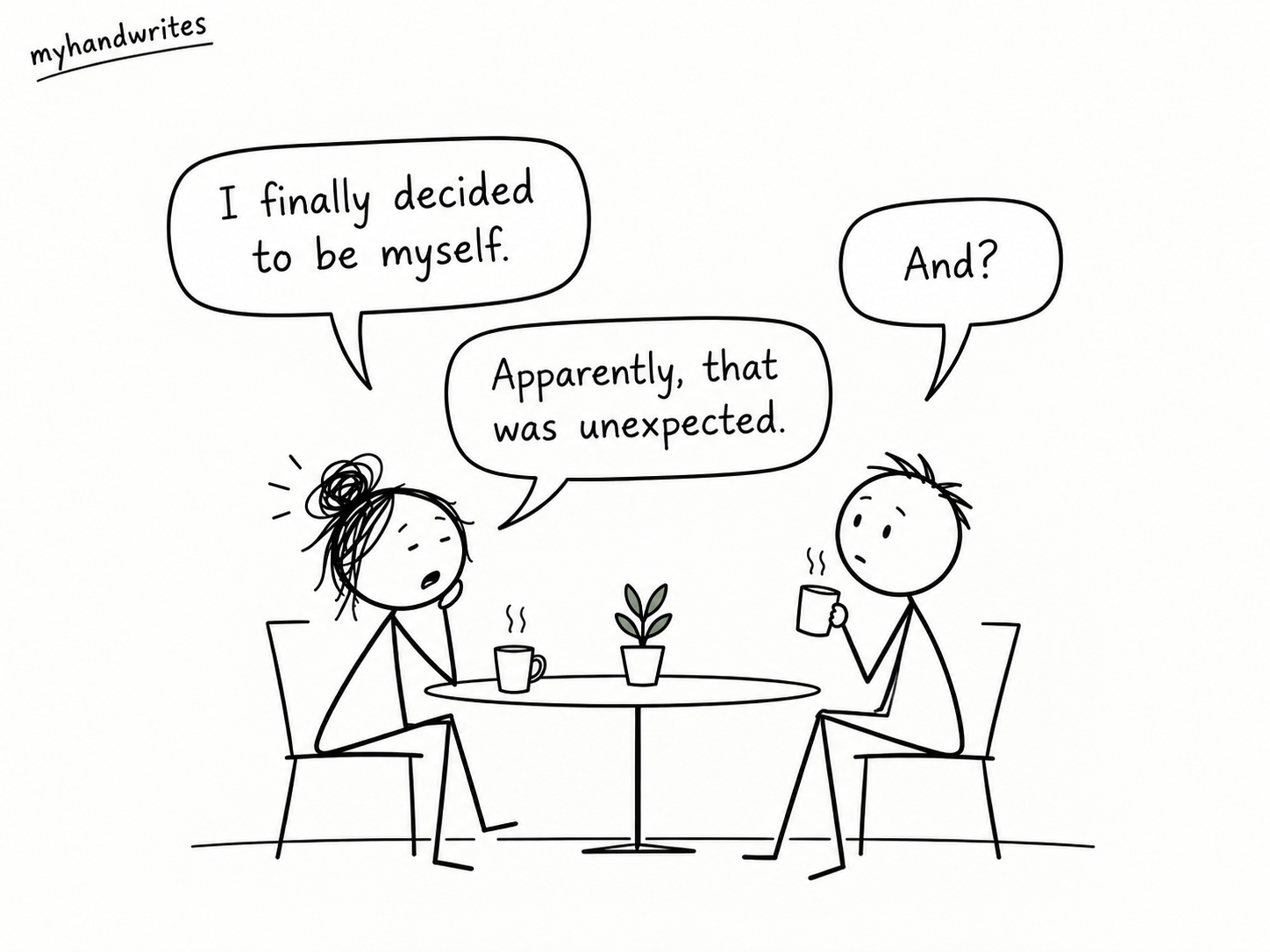
Everyone encourages authenticity. It’s one of those things people enthusiastically support until someone actually tries it.
At work, authenticity is a leadership quality. There are workshops about bringing your whole self to work, which is ambitious considering most people struggle to bring a functioning brain to Monday morning meetings. Tell someone their presentation could have been an email, and suddenly there’s a conversation about communication skills. So people say “Interesting perspective” while holding an entirely different meeting inside their heads.
At home, authenticity requires parental clearance. A fully grown adult with a job, a toddler and a mortgage mentions needing space. Within days, the parents are concerned. “Are you unhappy? Is everything okay?” Your authentic self enjoys breathing room. The family has initiated mental health investigation, complete with follow-up calls.
With friends, authenticity can get awkward. You may admit that juggling work, parenting and relationship is exhausting. A friend responds, “I’m just lucky that my partner is supportive!” You’re thinking “Wonderful. Congratulations on your excellent domestic infrastructure.” Your authentic self has several responses. The socially acceptable self smiles and orders another coffee.
On LinkedIn, authenticity is encouraged, preferably with professional photographs and three leadership lessons. A terrible Tuesday must become “Five Things Adversity Taught Me About Resilience” by Thursday. Being genuinely vulnerable risks judgment. Being polished risks becoming indistinguishable from everyone else.
The trouble with authenticity is that it comes with consequences. Someone might disagree, take offence or decide that the original version was better left unpublished.
So people edit themselves. A little at work, a little at home, a little with friends. Some editing is necessary. Nobody needs unrestricted access to every thought that crosses someone else’s mind.
But how much editing is too much? Being yourself might cost you someone’s approval. Pretending might earn you plenty of it.
The awkward part is deciding whose approval matters more: theirs or your own.
And neither comes with a money-back guarantee.
Leave a Reply